

Completing the Sijil Pelajaran Malaysia (SPM) or the International General Certificate of Secondary Education (IGCSE) is a proud milestone in every young person’s educational journey. For parents and students alike, this achievement naturally raises an important question: Which pathway leads to the right university and future career?
In Malaysia, secondary school leavers do not enter an undergraduate Bachelor’s degree directly. Instead, students first complete an intermediate qualification, choosing from a Pre-University programme, a Foundation programme, or a Diploma, before progressing to a university degree. Understanding how each route works empowers families to make confident, well-informed decisions tailored to their child’s strengths, learning style, and long-term aspirations.
1. Understanding the Core Pathways After Secondary School
Whether a student graduates from a national KSSM school such as Sri LEAD with SPM, a Cambridge school such as Lead International School with IGCSE, or any secondary institution across Malaysia, there are three primary post-secondary routes to consider.
| Pathway | Typical Duration | Minimum Entry Requirement | Best Suited For | Progression Outcome |
|---|---|---|---|---|
|
Pre-University (Cambridge A-Levels, STPM, IB, AUSMAT, CPU) |
1 to 2 years | 5 credits in SPM or IGCSE | Academic all-rounders aiming for top global or local universities | Year 1 of a Bachelor’s degree (local or overseas) |
| Foundation | 1 year | 5 credits in SPM or IGCSE | Students certain of their chosen field (e.g., Engineering, Business, Science) | Year 1 of a Bachelor’s degree (usually at the same university) |
| Diploma | 2 to 3 years | 3 credits in SPM or IGCSE | Practical learners wanting hands-on skills and early industry exposure | Year 2 of a Bachelor’s degree (via credit transfer) or direct employment |
Pre-University Programmes

Pre-University programmes are academically rigorous qualifications recognised by universities across Malaysia and around the world.
- Cambridge International A-Levels: Widely regarded as the gold standard for university preparation, Cambridge A-Levels allow students to specialise in three or four subjects aligned with competitive degrees such as Medicine, Engineering, Law, Business, Computer Science, or Economics.
Students seeking a modern, personalised pre-university experience can explore the Cambridge A-Level Programme at LSL Education Group. Built upon the founder’s decades of experience in shaping Malaysian and international education, the programme combines small-group academic coaching with future-ready leadership opportunities, specialist subject options, and merit scholarships of up to 100%. - Sijil Tinggi Persekolahan Malaysia (STPM): Malaysia’s national Form 6 programme (1.5 years), valued for its academic depth, affordability, and acceptance at all Malaysian public universities as well as international institutions.
- Matriculation: A 1-year or 2-year government-funded pre-university programme primarily designed for SPM leavers seeking entry into Malaysian public universities.
- International Baccalaureate (IB) Diploma, AUSMAT / SACE, & Canadian Pre-University (CPU): International 1- to 2-year qualifications offering alternative balances of coursework, research, and final examinations.
Foundation Programmes
A Foundation programme is a focused, 1-year fast-track course tailored to prepare students for a specific degree discipline, such as Foundation in Science, Arts, Business, or Computing.
- Key Consideration: Private university Foundation programmes are typically designed to articulate directly into that same institution’s degree programmes. While fast and focused, transferring to another university after completing a Foundation programme can sometimes be restricted.
Diploma Programmes
A Diploma spans 2 to 3 years and blends theoretical knowledge with practical, industry-focused training, often incorporating an internship.
- Key Consideration: Graduates of a Diploma accredited by the Malaysian Qualifications Agency (MQA) can either enter the workforce immediately or transfer credits into Year 2 of a related Bachelor’s degree.
2. Pursuing Higher Education at Malaysian Public Universities (IPTA)
Malaysia’s public universities, known as Institusi Pendidikan Tinggi Awam (IPTA), offer respected degrees, strong research ecosystems, and heavily subsidised tuition fees for Malaysian citizens.
Prominent Public Universities in Malaysia
- Universiti Malaya (UM): Located in Kuala Lumpur, UM is Malaysia’s oldest and highest-ranked university globally, renowned for Medicine, Engineering, Law, and Economics.
- Universiti Kebangsaan Malaysia (UKM): Situated in Bangi, Selangor, UKM is celebrated for its strong research culture, teaching hospital, and programmes in Medicine, Social Sciences, and Science and Technology.
- Universiti Sains Malaysia (USM): Based in Penang, USM holds APEX (Accelerated Programme for Excellence) status and excels in Pharmaceutical Sciences, Computer Science, and Sustainability studies.
- Universiti Putra Malaysia (UPM): Located in Serdang, Selangor, UPM is a premier research institution recognised for Agriculture, Veterinary Medicine, Environmental Sciences, and Business.
- Universiti Teknologi Malaysia (UTM): With campuses in Johor Bahru and Kuala Lumpur, UTM is Malaysia’s leading hub for Engineering, Architecture, and Computing.
SPM Requirements for Malaysian Public Universities
Admission into Malaysian public universities is centralised through the UPUOnline portal for Malaysian citizens and Permanent Residents. Applicants must meet strict baseline SPM criteria:
- General Entry Requirements:
- Obtain a Pass in SPM (achieving at least a Pass in both Bahasa Melayu and Sejarah to be awarded the SPM certificate).
- Achieve at least a Credit (Grade C or higher) in Bahasa Melayu.
- Pass Sejarah (History).
- When progressing from STPM, Matriculation, Foundation, or a Diploma into a public university Bachelor’s degree, applicants must also sit for the Malaysian University English Test (MUET) and achieve the minimum band required for their chosen degree.
- Programme-Specific Requirements:
- Competitive fields require strong grades in relevant SPM subjects. For example, public university Foundation or Matriculation Science streams generally require at least a Grade B or C in Mathematics, Additional Mathematics, Chemistry, Physics, and Biology.
Important Guidance for IGCSE Graduates: Private universities in Malaysia and universities worldwide accept IGCSE qualifications directly for A-Levels, Foundation, and Diploma entry. However, Malaysian citizens graduating solely with IGCSE who wish to apply to a Malaysian public university (IPTA), or pursue regulated careers in Malaysian public hospitals or government service, must register as private candidates (Calon Persendirian) to sit for and pass SPM Bahasa Melayu (with a Credit) and SPM Sejarah.
3. Step-by-Step Roadmap to University Success
Navigating post-secondary choices becomes far calmer and clearer when approached step by step:
- Reflect on Strengths, Interests, and Learning Style: Consider whether the student thrives in in-depth academic study (such as Cambridge A-Levels or STPM), structured single-discipline preparation (Foundation), or hands-on applied learning (Diploma).
- Shortlist Career Fields and Degree Prerequisites: Identify two or three areas of interest (such as Healthcare, Engineering, Finance, or Creative Industries) and verify the required pre-university subjects early.
- Verify Accreditation and Recognition: Ensure every shortlisted programme and institution is accredited by the Malaysian Qualifications Agency (MQA) and recognised by relevant professional bodies.
- Explore Scholarships and Financial Planning: Compare tuition fees and scholarship opportunities across institutions. Many students secure substantial merit fee waivers using their trial, forecast, or final SPM and IGCSE results.
- Track Application Windows Carefully:
- Public Universities (UPUOnline): Monitor official Ministry of Higher Education timelines, which typically open in two phases around February/March and after SPM results are released.
- Private Institutions & A-Levels: Students can apply early for conditional offers and scholarship assessments using forecast or trial examination grades.
- Seek Experienced, Objective Academic Guidance: Every learner’s academic profile and family goals are unique. Families looking for structured, holistic counselling can consult dedicated placement advisors such as the LSL Student Placement Centre (SPC) in Puchong. Guided by decades of educational leadership, the centre supports school leavers across the wider community with university comparisons, IELTS and MUET preparation pathways, scholarship applications, and end-to-end admission planning.
Planning Your Next Step
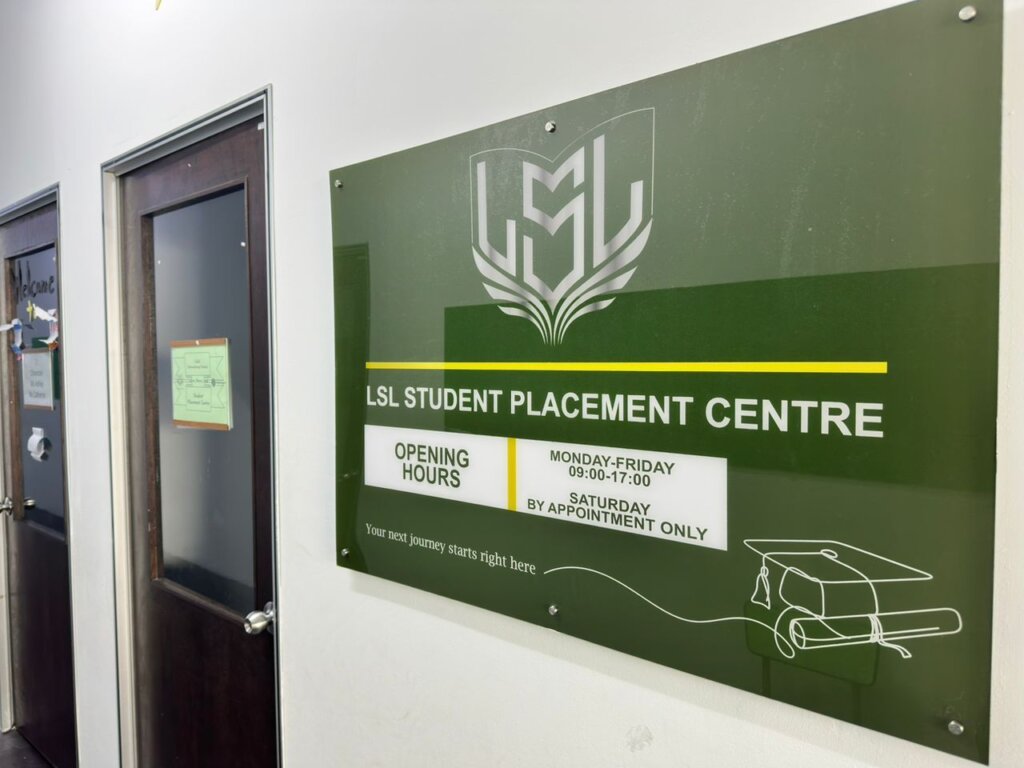
Choosing the right bridge between secondary school and university is about matching a student’s natural abilities with an environment designed for modern success. Bringing together KSSM, IGCSE, Cambridge A-Levels, English proficiency preparation, and university placement under one roof, LSL Education Group and the LSL Student Placement Centre offer holistic educational pathways and personalised higher education counselling to students from Sri LEAD, Lead International School, and the broader community.
- Location: LSL Education Group, No. 1, Jalan BK1/13, Bandar Kinrara Industrial Park, 47180 Puchong, Selangor (2 minutes’ walk from Alam Sutera LRT Station)
- Contact: +6016 231 3200 (WhatsApp)
- Hours: Monday to Friday, 9:00 a.m. to 5:00 p.m. (Saturday by appointment)